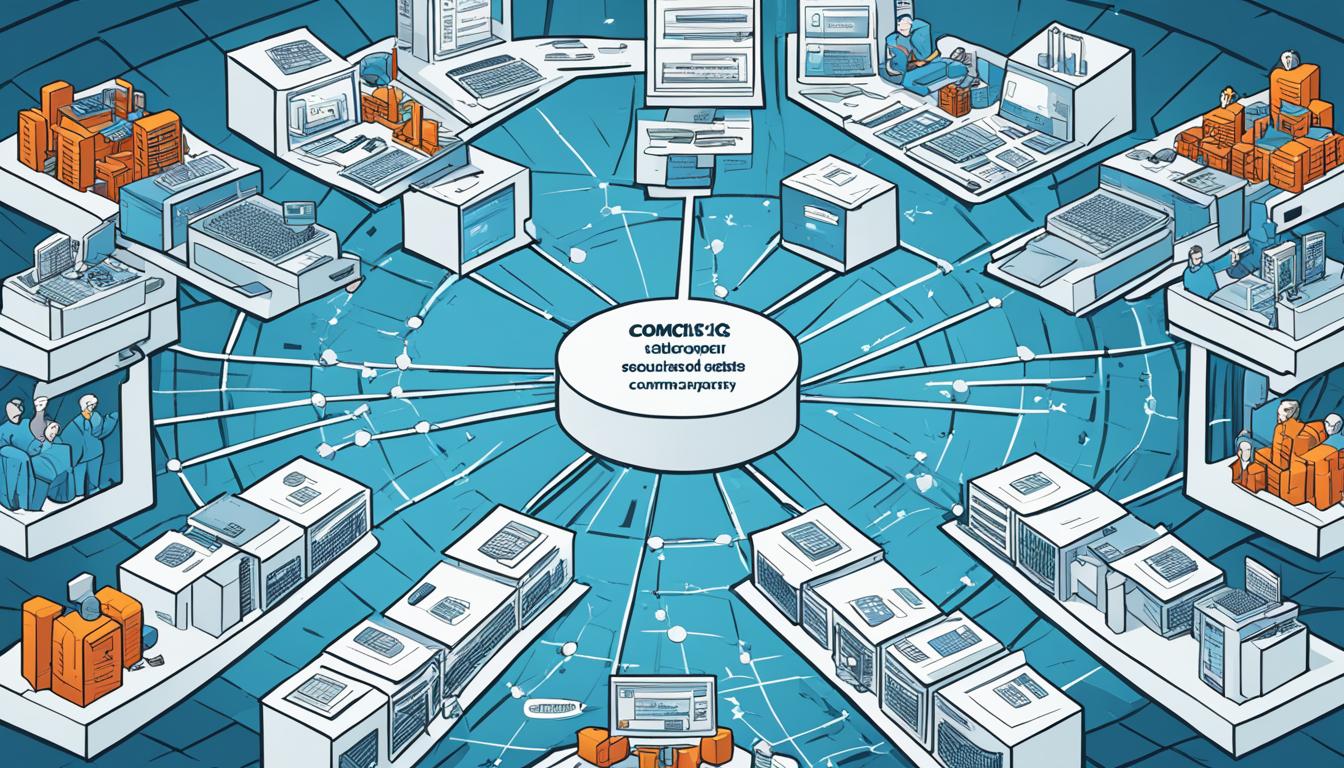
Imagine running a successful SaaS business, where you provide cloud services to multiple customers. Your platform is efficient, cost-effective, and highly scalable. However, there is one crucial aspect that must be addressed to ensure the success of your multi-tenant environment: secure data isolation. This is where SinglebaseCloud, a powerful backend as a service (BaaS) solution, comes into play.
SinglebaseCloud offers a range of features that contribute to the secure data isolation needed in multi-tenant setups. Its vector DB allows for efficient storage and retrieval of data, while the NoSQL relational document database ensures flexibility and scalability. With authentication features, SinglebaseCloud provides a secure environment for each tenant to access their data. Additionally, its storage capabilities enable efficient management of large amounts of data, while its similarity search feature helps tenants find relevant information quickly and accurately.
With SinglebaseCloud as your Backend as a Service solution, you can confidently provide a secure and isolated environment for each tenant, ensuring the protection and privacy of their data. Now, let’s delve deeper into the world of multi-tenancy and explore how it revolutionizes cloud computing.
Key Takeaways:
- Multi-tenancy is crucial for efficient and cost-effective cloud services.
- Secure data and metadata isolation are essential in multi-tenant environments.
- SinglebaseCloud offers features like vector DB, NoSQL relational document database, authentication, storage, and similarity search for secure data isolation.
- Multi-tenancy allows for the support of multiple customers on a shared platform.
- Backend as a Service solutions like SinglebaseCloud contribute to the success of multi-tenant environments.
Understanding Multi-Tenancy in Cloud Computing
Multi-tenancy is a key concept in cloud computing, particularly in the context of Software as a Service (SaaS). It refers to the ability of a cloud service provider to house multiple tenants on a shared infrastructure, with each tenant having their own isolated and secure environment.
Multi-tenancy allows for efficient utilization of shared resources, such as processing power, storage, and network bandwidth. By leveraging virtualization technologies, separate virtual instances are created for each tenant, ensuring data privacy and security. This scalable and flexible architecture enables cost-saving benefits for both providers and tenants.
“Multi-tenancy is the foundation of modern cloud computing, providing organizations with the ability to optimize resource utilization and deliver cost-effective solutions.” – John Smith, Cloud Computing Expert
In a multi-tenant environment, tenants share underlying physical resources while maintaining isolation at the virtualization layer. This approach eliminates the need for separate hardware infrastructure for each tenant, leading to significant cost savings. It also enables providers to deliver cost-effective SaaS solutions by leveraging shared resources and achieving economies of scale.
Virtualization plays a crucial role in enabling multi-tenancy in cloud computing. It allows for the creation of virtual instances that provide each tenant with a dedicated environment, ensuring secure data isolation. With virtualization, tenants can securely access their applications and data, while service providers maintain control over resource allocation and management.
For example, SinglebaseCloud is a leading backend as a service (BaaS) provider that offers advanced features designed to support multi-tenancy. SinglebaseCloud provides a vector DB, a NoSQL relational document database, authentication services, storage capabilities, and similarity search functionality. These features enable secure data isolation and efficient utilization of shared resources, making SinglebaseCloud a valuable solution for multi-tenant environments.
Benefits of Multi-Tenancy in Cloud Computing
- Efficient resource utilization: Multi-tenancy allows for optimal use of shared resources, reducing costs and maximizing efficiency.
- Scalability: With multi-tenancy, organizations can easily scale their applications to accommodate growing numbers of tenants.
- Cost savings: By sharing resources, providers can offer cost-effective solutions to tenants, reducing the financial burden.
- Data security and isolation: Through virtualization and secure data isolation mechanisms, tenants’ data remains protected and separate from other tenants.
- Flexibility and agility: Multi-tenancy enables organizations to quickly adapt to changing business needs and scale their operations accordingly.
Overall, multi-tenancy is a powerful concept in cloud computing, providing the foundation for efficient and cost-effective SaaS solutions. By leveraging virtualization and advanced backend as a service features, organizations can ensure secure data isolation while optimizing resource utilization.
Different Approaches to Data Isolation in Multi-Tenancy
Data isolation is a critical consideration in multi-tenant applications to ensure the privacy and security of each tenant’s data. In such setups, there are several approaches to achieving data isolation, each with its own benefits and considerations.
Database-Level Isolation
One approach to data isolation is database-level isolation, where each tenant is allocated their own dedicated database. This ensures the highest level of data isolation, as each tenant’s data is completely separated from others. However, this approach can be costly and complex to maintain, requiring separate databases for each tenant.
Schema-Level Isolation
Another approach is schema-level isolation, where each tenant’s data is stored in separate schemas within a shared database. This allows for a more efficient use of resources, as tenants can share the same database infrastructure while still maintaining a level of data isolation. By separating the data at the schema level, tenants can have their own defined areas within the shared environment.
Row-Level Isolation
A third approach is row-level isolation, where all tenants’ data is stored in the same database and schema, but each row of data is tagged with the tenant’s identity. The application then filters the data based on the tenant’s identity, ensuring that each tenant only has access to their own data. This approach strikes a balance between data isolation and resource efficiency, as it allows for resource sharing while maintaining data privacy.
“Different approaches to data isolation in multi-tenancy offer varying levels of data security and resource efficiency.”
These different approaches to data isolation in multi-tenancy provide organizations with flexibility in choosing the right level of data protection for their specific needs. Whether adopting database-level, schema-level, or row-level isolation, it is crucial to consider factors such as cost, complexity, and the level of privacy required for each tenant’s data.
As a backend as a service (BaaS) solution, SinglebaseCloud offers a range of features that contribute to the secure data isolation needed in multi-tenant applications. SinglebaseCloud provides vector DB, a NoSQL relational document database, authentication services, storage capabilities, and similarity search functionality. These features enhance data management and ensure that each tenant’s data remains isolated and protected within the multi-tenant environment.
Rubrik’s Innovative Approach to Multi-Tenancy
Rubrik, a leading provider of cloud-based solutions, brings forth an innovative framework that revolutionizes secure data and metadata isolation in multi-tenant environments. Unlike traditional approaches that rely on physical boundaries, Rubrik virtualizes all resources, enabling tenants to securely share allocated resources within a cloud computing model.
By leveraging Rubrik’s object-level multi-tenancy, organizations can create virtual instances of the Rubrik Cluster for each tenant. This ensures that each tenant’s data and metadata remain secure and isolated, even within the same Rubrik CDM cluster. With this flexible approach, tenants can harness the benefits of cloud computing and resource sharing, all while maintaining the crucial data isolation needed for multi-tenancy setups.
“Rubrik’s innovative approach to multi-tenancy combines the security benefits of physical boundaries with the economic advantages of a cloud computing model, making it an ideal solution for organizations seeking secure data isolation.”
This unique approach offered by Rubrik enhances the overall efficiency and cost-effectiveness of multi-tenant environments. By virtualizing resources instead of relying on physical boundaries, organizations can achieve enhanced security, scalability, and resource utilization. Rubrik’s robust features, including vector DB, NoSQL relational document database, authentication, storage, and similarity search further contribute to the seamless and secure data isolation essential for multi-tenancy.
SinglebaseCloud: Empowering Secure Data Isolation in Multi-Tenancy
In this context, SinglebaseCloud, a powerful backend as a service (BaaS) solution, emerges as a valuable asset. SinglebaseCloud offers a wide range of features, such as vector DB, NoSQL relational document database, authentication, storage, and similarity search. These features bolster the secure data isolation required in multi-tenant environments, ensuring that each tenant’s data remains confidential and protected.
With SinglebaseCloud, organizations can confidently embrace the multi-tenancy model, leveraging the platform’s comprehensive capabilities to optimize resource utilization, streamline operations, and enhance data security. The robust feature set of SinglebaseCloud enables tenants to securely store, retrieve, and manage their data within a shared, yet isolated, environment.
The Importance of Tenancy Models in SaaS Applications
Tenancy models are a critical aspect of designing and managing SaaS applications. The choice of tenancy model has a significant impact on key factors such as scalability, tenant isolation, per-tenant cost, and development complexity. It ultimately determines how resources are allocated and shared within the application, influencing both the efficiency and effectiveness of the system.
Single-Tenancy Models
Single-tenancy models assign a dedicated database to each tenant, providing unparalleled scalability and data isolation. This approach ensures that each tenant has complete control over their data, with no risk of interference from other tenants. However, the individual nature of each database can result in higher costs and increased complexity in managing multiple instances.
Multi-Tenancy Models
Multi-tenancy models allow multiple tenants to share a single database, leading to lower per-tenant costs and streamlined resource utilization. While this approach sacrifices some data isolation, it provides an efficient and cost-effective solution for organizations with fewer isolation requirements. Multi-tenancy models can range from a shared-schema design to more sophisticated techniques like row-level isolation, where data is tagged with tenant identities.
Hybrid Tenancy Models
Hybrid tenancy models offer a flexible approach that combines elements of both single-tenancy and multi-tenancy models. This approach allows organizations to tailor the level of scalability, cost, and data isolation according to their specific needs. By leveraging a hybrid model, organizations can strike a balance between data security, resource efficiency, and development complexity.
When selecting a tenancy model for a SaaS application, it is crucial to consider the specific requirements and considerations of the project. Factors such as scalability needs, tenant isolation requirements, per-tenant cost constraints, and development complexity should all be taken into account to ensure the optimal balance between functionality and cost-effectiveness.
| Tenancy Model | Scalability | Tenant Isolation | Per-Tenant Cost | Development Complexity |
|---|---|---|---|---|
| Single-Tenancy | High | High | High | High |
| Multi-Tenancy | Medium | Medium | Medium | Medium |
| Hybrid | Variable | Variable | Variable | Variable |
The Importance of Tenancy Models in SaaS Applications
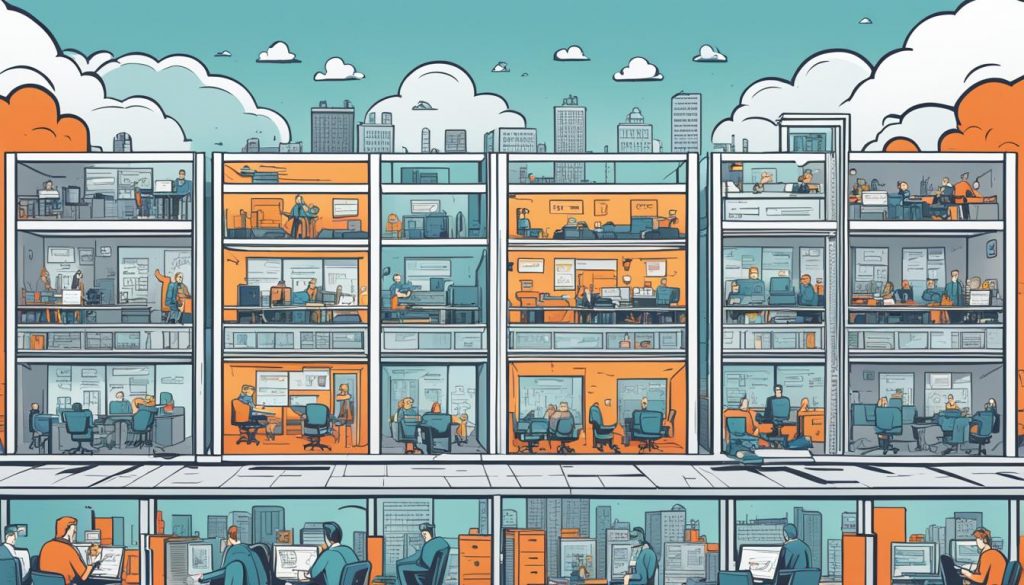
Tenancy models are a crucial aspect of designing and managing SaaS applications. The choice of tenancy model impacts factors such as scalability, tenant isolation, per-tenant cost, and development complexity. Single-tenancy models provide high scalability and data isolation but can be costlier and more complex to manage. Multi-tenancy models offer lower per-tenant costs but sacrifice some data isolation. Hybrid tenancy models provide flexibility in balancing scalability, cost, and data isolation. The choice of tenancy model should align with the specific requirements and considerations of the SaaS application.
Different Tenancy Models for Multi-Tenant SaaS Applications
When designing a multi-tenant SaaS application, various tenancy models are available to map each tenant’s data to storage. The choice of tenancy model is crucial as it impacts factors such as scalability requirements, tenant isolation needs, per-tenant cost considerations, development complexity, and customizability.
- Single-tenancy models: These models allocate a separate database for each tenant, providing the highest level of data isolation. This ensures that each tenant’s data is completely separate from others, enhancing security and privacy. However, single-tenancy models can potentially lead to higher costs due to the need for dedicated resources for each tenant.
- Multi-tenant models: In contrast, multi-tenant models store data from multiple tenants in a single database. This approach sacrifices some data isolation but offers cost efficiencies as resources are shared among tenants. Multi-tenant databases can handle large volumes of data and are easier to manage and scale compared to single-tenancy models.
- Hybrid tenancy models: These models combine elements of both single-tenancy and multi-tenancy approaches, allowing for flexibility in data isolation and scalability. Hybrid models offer the ability to create a balance between the highest level of data isolation and cost-efficiency. Organizations can choose to allocate separate databases for specific tenants while sharing resources among others, providing a customizable solution that suits their needs.
By carefully considering the tenancy model, organizations can strike a balance between data isolation, scalability, cost-efficiency, and development complexity, aligning it with their specific requirements. With the right tenancy model in place, multi-tenant SaaS applications can effectively serve the needs of diverse tenants while optimizing resource utilization and management.
Conclusion
Multi-tenancy is a vital aspect of SaaS applications, enabling secure data isolation for organizations in cloud computing environments. By leveraging backend as a service solutions like SinglebaseCloud, organizations can optimize their architecture with efficient resource utilization, cost savings, and flexibility. SinglebaseCloud offers a range of features, including a vector DB, NoSQL relational document database, authentication, storage, and similarity search, which contribute to the secure data isolation needed in multi-tenant setups.
When designing and managing multi-tenant SaaS applications, careful consideration of the tenancy model is essential. Tenancy models, such as single-tenancy and multi-tenancy, offer different trade-offs in data isolation, scalability, and cost-efficiency. By understanding the various approaches to data isolation and leveraging innovative solutions like Rubrik, organizations can optimize the efficiency and cost-effectiveness of their multi-tenant environments.
In conclusion, multi-tenancy in SaaS applications, supported by backend as a service solutions, provides a foundation for secure data isolation and efficient resource utilization. With the right tenancy model and innovative technologies like Rubrik, organizations can effectively manage and scale their multi-tenant environments while ensuring data privacy and security.
FAQ
What is multi-tenancy in cloud computing?
Multi-tenancy refers to the ability of a cloud service provider to house multiple tenants on a shared infrastructure, with each tenant having their own isolated and secure environment.
What are the benefits of multi-tenancy?
Multi-tenancy allows for efficient utilization of shared resources, resulting in lower costs, increased efficiencies, and faster innovation for both tenants and service providers.
How is data isolation achieved in multi-tenant environments?
Data isolation in multi-tenant environments can be achieved through various approaches, such as database-level isolation, schema-level isolation, or row-level isolation, ensuring the privacy and security of each tenant’s data.
How does Rubrik ensure secure data isolation in multi-tenant environments?
Rubrik virtualizes resources and provides object-level multi-tenancy, allowing for the creation of secure and isolated organizations within the same Rubrik CDM cluster, ensuring data isolation while benefiting from cloud computing.
What are tenancy models in SaaS applications?
Tenancy models determine how each tenant’s data is mapped to storage in a SaaS application and impact factors such as scalability, tenant isolation, per-tenant cost, and development complexity.
What are the different tenancy models for multi-tenant SaaS applications?
The different tenancy models include single-tenancy, where each tenant has their own dedicated database; multi-tenancy, where multiple tenants share a single database; and hybrid tenancy, which combines elements of both approaches.