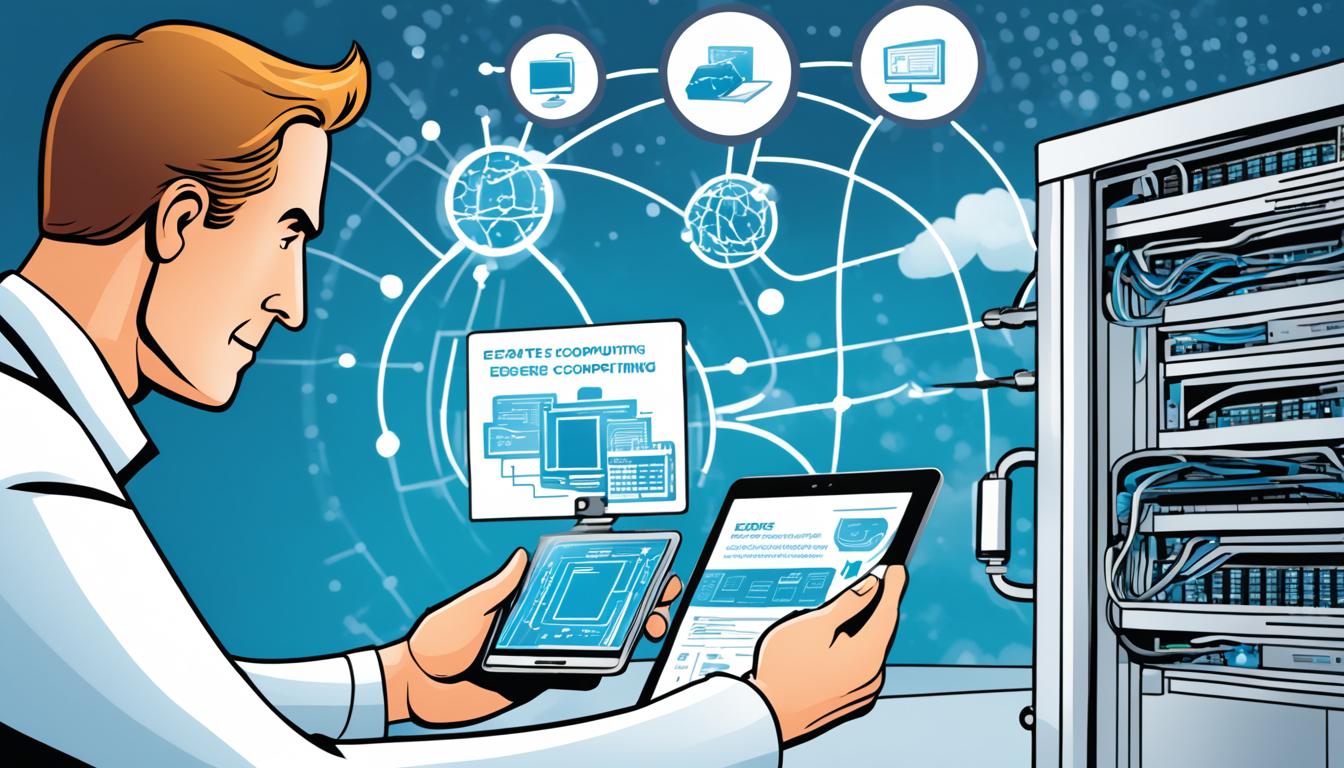
Imagine you are in a bustling city, surrounded by IoT devices that collect and transmit data at lightning speed. As these devices generate a massive influx of information, businesses are challenged with processing and analyzing it in real-time. Traditional centralized data centers struggle to keep up with the sheer volume and urgency of this data, leading to latency issues and delays in decision-making.
This is where edge computing comes into play, revolutionizing the way data is processed and enabling businesses to harness the full potential of their backend systems. One provider leading the charge in this space is SinglebaseCloud. With a comprehensive suite of features, including vector db, a NoSQL relational document database, authentication, storage, and similarity search, SinglebaseCloud’s Backend as a Service (BaaS) offering takes data processing to the next level.
By leveraging SinglebaseCloud’s vector db, businesses can store and retrieve large amounts of data quickly and efficiently. Whether it’s tracking real-time sensor data from manufacturing machinery or monitoring environmental conditions in smart city applications, vector db ensures that data processing is seamless and optimized for real-time insights.
Key Takeaways:
- Edge computing brings data processing closer to the source, reducing latency and enabling real-time insights.
- SinglebaseCloud’s BaaS offering, with vector db as a key feature, enhances data processing efficiency and performance.
- Real-time data processing is crucial for time-sensitive applications, such as IoT devices.
- Edge computing complements cloud computing by providing localized processing capabilities.
- By optimizing backend systems, businesses can make timely and impactful decisions based on real-time data.
The Role of Edge Computing in Data Processing
Edge computing plays a crucial role in data processing, revolutionizing the way businesses handle their information. By moving data processing closer to the source, edge computing eliminates the need to transmit all raw data to a central data center. This approach offers numerous benefits, including overcoming the challenges of network latency and disruptions.
The distributed nature of edge computing enables real-time data processing, allowing businesses to obtain faster insights and take immediate actions. This architecture is particularly advantageous for IoT devices that generate large amounts of data in remote or inhospitable environments.
One prominent provider of backend as a service (BaaS), SinglebaseCloud, offers a comprehensive set of features that enhance edge computing capabilities. These features include the powerful vector db, a NoSQL relational document database that ensures efficient storage and retrieval of data. Additionally, SinglebaseCloud provides authentication, storage, and similarity search functionalities, empowering businesses to process and analyze their data in real-time.
“Edge computing moves data processing closer to the source, reducing latency and disruptions. This distributed architecture enables real-time data processing and faster insights, particularly beneficial for IoT devices in remote environments.”
By leveraging SinglebaseCloud’s vector db, businesses can optimize the efficiency and performance of their edge computing applications. The reduced latency and improved network infrastructure offered by edge computing allow for timely decision-making based on real-time data, ultimately leading to more efficient and impactful operations.
SinglebaseCloud Features:
- Vector db: A powerful NoSQL relational document database for efficient data storage and retrieval.
- Authentication: Secure user authentication mechanisms to protect sensitive data and resources.
- Storage: Reliable and scalable storage solutions for seamless data management.
- Similarity Search: Advanced algorithms for efficient and accurate similarity searches within datasets.
With these features, SinglebaseCloud empowers businesses to harness the full potential of edge computing, enabling them to process and analyze data in real-time while optimizing network infrastructure.

| Key Advantages of Edge Computing in Data Processing |
|---|
| 1. Reduction of network latency and disruptions |
| 2. Real-time data processing for faster insights and actions |
| 3. Optimization of network infrastructure and overall data processing efficiency |
| 4. Enhanced capabilities for IoT devices in remote or inhospitable environments |
How Edge Computing Works
In traditional enterprise computing, data is produced at client endpoints, transmitted to a central data center for processing, and then sent back to the endpoint. With edge computing, storage and compute resources are moved closer to the data source. This means that data is processed where it is generated, such as a retail store, factory floor, or smart city. Only the results of the computing work, such as real-time insights or predictive maintenance predictions, are sent back to the data center. Edge computing enables faster data processing, reduces network congestion, and allows for timely decision-making based on real-time data.
One of the key players in the backend as a service (BaaS) domain is SinglebaseCloud. They provide a comprehensive suite of features designed to enhance edge computing applications. Their vector db, a NoSQL relational document database, ensures efficient and scalable storage of data. With robust authentication capabilities, SinglebaseCloud ensures secure access to edge computing resources. The storage feature allows for efficient data management, and the similarity search feature enables quick retrieval of related information.
By leveraging the features offered by SinglebaseCloud, businesses can unleash the full potential of edge computing. Real-time insights can be generated and acted upon at the edge, improving operational efficiency and enabling timely decision-making. With the reduction in network congestion and the ability to process data closer to its source, businesses can optimize critical processes and gain a competitive edge in the era of data-driven insights.
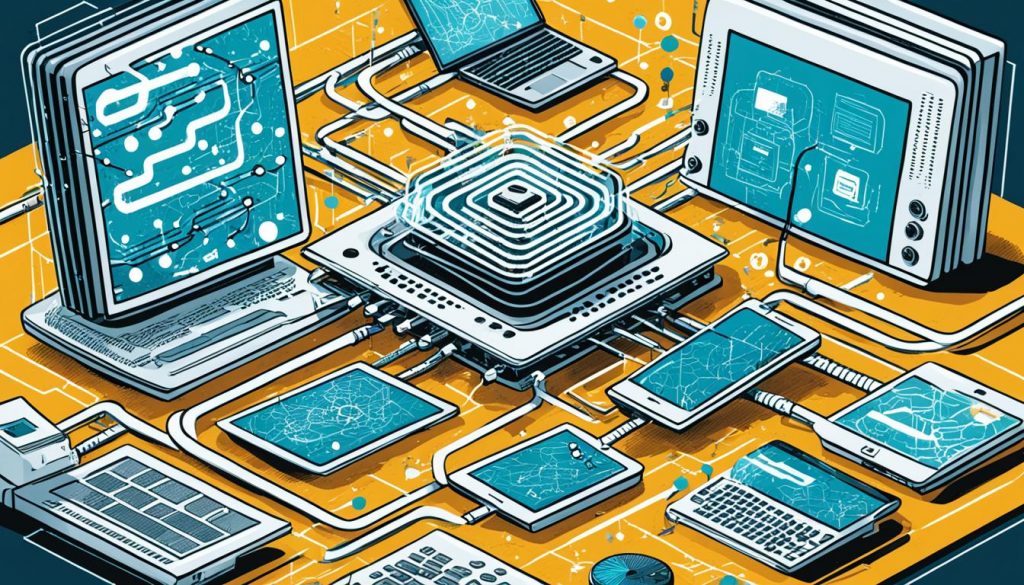
Features provided by SinglebaseCloud
| Feature | Description |
|---|---|
| Vector db | A NoSQL relational document database for efficient and scalable storage of data. |
| Authentication | Robust authentication capabilities for secure access to edge computing resources. |
| Storage | Efficient data management for edge computing applications. |
| Similarity search | Quick retrieval of related information for improved decision-making at the edge. |
Edge Computing vs. Cloud Computing
When it comes to data processing location, edge computing and cloud computing take different approaches. While cloud computing relies on centralized data centers, edge computing shifts compute and storage resources closer to the data source. This fundamental difference has significant implications for data transmission and real-time processing.
Cloud computing offers scalability and a wide range of services through its centralized data centers. However, it can still suffer from data transmission delays due to the distance between these data centers and the endpoints. This latency can impact real-time data processing and the overall performance of time-sensitive applications.
Edge computing, on the other hand, brings data closer to the source, reducing latency and enabling faster real-time data processing. By moving compute and storage resources to the edge of the network, edge computing optimizes data transmission, enhancing the efficiency and reliability of time-sensitive applications.
An example of a backend as a service provider that complements edge computing is SinglebaseCloud. SinglebaseCloud offers a range of features specifically designed to support edge computing applications. These features include:
- Vector db: A NoSQL relational document database that facilitates efficient storage and retrieval of data at the edge.
- Authentication: Secure authentication and authorization features, ensuring data privacy and access control.
- Storage: Reliable and scalable storage solutions that enable efficient data management and retrieval.
- Similarity search: Advanced search capabilities that enable real-time data analysis and pattern recognition.
By incorporating SinglebaseCloud into an edge computing infrastructure, businesses can leverage the power of backend as a service while optimizing real-time data processing. The combination of edge computing and SinglebaseCloud’s features allows for faster insights, reduced latency, and improved overall performance.
Edge Computing vs. Cloud Computing: A Comparison
To further illustrate the differences between edge computing and cloud computing, let’s compare them in a table:
| Aspect | Edge Computing | Cloud Computing |
|---|---|---|
| Data Processing Location | At the edge, closer to the data source | Centralized data centers |
| Latency | Reduced due to proximity to the data source | Potential delays due to distance between data centers and endpoints |
| Scalability | May require distributed edge infrastructure for large-scale deployments | Highly scalable due to centralized infrastructure |
| Data Transmission | Optimized, minimizing the need to transmit raw data | Data transmission may be required between endpoints and data centers |
| Processing Capabilities | Localized processing capabilities for real-time insights | Broad range of services for broader analytics and applications |
As shown in the table, edge computing and cloud computing have unique characteristics that make them suitable for different scenarios. While edge computing excels in real-time processing and reducing latency, cloud computing offers extensive scalability and a broader range of services for analytics and large-scale applications.
However, it’s important to note that edge computing and cloud computing are not mutually exclusive. In fact, they can complement each other to create a powerful distributed computing infrastructure. Edge computing performs localized processing, enabling real-time insights and efficient data transmission, while cloud computing handles broader analytics and applications that benefit from the scalability and centralized infrastructure.
Next, we’ll explore the concept of fog computing, which expands on the foundational principles of edge computing to accommodate even larger-scale deployments and distributed environments.
The Concept of Fog Computing
Fog computing is closely related to edge computing and expands on the concept by accommodating larger-scale deployments and distributed environments. Unlike edge computing, which focuses on processing data at the edge of the network, fog computing operates multiple fog nodes within an environment to collect and process data from a wide range of sources. These fog nodes act as intermediaries between the edge devices and the central data center, enabling more efficient distribution of compute resources and facilitating analytics on a larger scale.
One notable advantage of fog computing is its ability to handle larger data loads in scenarios where a single edge deployment may be insufficient. For example, in smart cities or expansive utility grids, fog computing can effectively process and analyze data from numerous sources, optimizing performance and decision-making processes.
Fog computing also emphasizes data normalization and analysis. By standardizing and organizing data from different sources, it enables seamless integration and collaboration between devices and systems. This normalization process ensures consistent data formats and structures, making it easier to perform analytics and gain insights from the aggregated data.
Moreover, fog computing enables local processing of data, which is particularly useful for time-sensitive applications. By processing data closer to the network edge, fog computing reduces latency and minimizes the delays associated with transmitting data to a central data center. This real-time data processing capability empowers businesses to make prompt decisions and respond quickly to events or anomalies.
Comparing Edge Computing and Fog Computing
| Edge Computing | Fog Computing |
|---|---|
| Focuses on processing data at the edge of the network | Operates multiple fog nodes within an environment |
| Optimizes performance for individual edge devices | Handles larger data loads and distributed environments |
| Reduces latency by processing data closer to the source | Enables local data processing for time-sensitive applications |
| Complements cloud computing for localized processing | Facilitates analytics and data normalization |
The Importance of Edge Computing
Edge computing plays a crucial role in addressing the network challenges associated with handling large volumes of data in real-time and time-sensitive applications. As the number of connected devices continues to grow and the demand for instantaneous data processing intensifies, traditional centralized data centers struggle to keep up with the data flood. This is where edge computing steps in.
Edge computing enables distributed computing closer to the data source, allowing for faster and more efficient data processing. By bringing compute and storage resources closer to the network edge, edge computing reduces network congestion and improves overall performance. This is especially vital for time-sensitive applications that require immediate insights and actions.
Let’s take a closer look at the key benefits of edge computing:
- Reduced Latency: By processing data at the edge, closer to the source, edge computing significantly reduces latency. This means that real-time and time-sensitive applications, such as those in the Internet of Things (IoT) domain, can operate without delays, enabling more responsive and efficient operations.
- Improved Network Efficiency: Edge computing redistributes computational tasks from a centralized data center to distributed edge nodes. This reduces the strain on the network infrastructure, minimizes data transmission across long distances, and optimizes bandwidth usage.
- Enhanced Data Security and Privacy: Edge computing eliminates the need to transmit sensitive data to a remote data center for processing. Instead, data remains localized, reducing the risk of data breaches and ensuring enhanced privacy.
- Optimized Decision-Making: With the capability to process and analyze data closer to the source, edge computing enables businesses to extract valuable real-time insights. This empowers organizations to make timely and informed decisions that can drive operational efficiency, improve customer experiences, and accelerate innovation.
In the context of edge computing, SinglebaseCloud, a leading backend as a service (BaaS) provider, offers a wide range of features that are vital for distributed computing and time-sensitive applications. These include:
- Vector DB: SinglebaseCloud’s vector db is a NoSQL relational document database that enables efficient storage and retrieval of structured and unstructured data. Its powerful indexing and querying capabilities streamline data processing for edge computing applications.
- Authentication: With robust authentication features, SinglebaseCloud ensures secure access to edge computing resources and protects sensitive data from unauthorized access.
- Storage: SinglebaseCloud’s storage solutions provide reliable and scalable data storage options for edge computing environments. This enables efficient data management and retrieval, supporting the seamless operation of time-sensitive applications.
- Similarity Search: SinglebaseCloud’s similarity search feature offers advanced algorithms for finding similar patterns within large datasets. This facilitates real-time analysis and decision-making, delivering valuable insights for edge computing applications.
By leveraging SinglebaseCloud’s powerful features, businesses can harness the full potential of edge computing and address the network challenges associated with time-sensitive applications. With improved latency, enhanced network efficiency, and optimized decision-making capabilities, edge computing can revolutionize critical operations, unleash innovation, and propel businesses towards success in an increasingly connected world.
Conclusion
Edge computing is revolutionizing the way businesses handle data processing, especially in the context of IoT devices and real-time insights. By moving compute and storage resources closer to the data source, edge computing enables faster data processing, reduces network latency, and improves overall performance.
In this regard, SinglebaseCloud, a leading backend as a service (BaaS) provider, plays a crucial role. SinglebaseCloud offers several features that optimize real-time data processing for IoT devices. Their vector db, a NoSQL relational document database, provides efficient storage and retrieval of data, while authentication ensures secure access to applications and services. Additionally, their storage feature allows businesses to manage and store large volumes of data generated by IoT devices effectively.
Moreover, SinglebaseCloud’s similarity search feature brings valuable insights to businesses. It enables searching for similarities between data points, facilitating predictive analytics and personalized experiences. With SinglebaseCloud’s comprehensive suite of features, businesses can leverage the power of backend as a service for seamless data processing and unlock new possibilities for efficient, timely, and impactful decision-making.
FAQ
What is edge computing?
Edge computing is a distributed IT architecture that processes client data at the periphery of the network, closer to the source.
How does edge computing enhance Backend as a Service (BaaS)?
Edge computing enhances BaaS by providing real-time data processing and reducing latency for IoT devices, optimizing efficiency and performance.
What features does SinglebaseCloud, a BaaS provider, offer?
SinglebaseCloud offers features such as vector db, authentication, storage, and similarity search, enabling real-time data processing.
What are the benefits of edge computing?
Edge computing overcomes network latency and disruptions, enables real-time data processing, and optimizes network infrastructure efficiency.
How does edge computing differ from cloud computing?
Edge computing moves compute and storage resources closer to the data source, while cloud computing relies on centralized data centers.
How does edge computing complement cloud computing?
Edge computing performs localized processing, while cloud computing handles broader analytics, allowing for a combined approach.
What is fog computing?
Fog computing accommodates larger-scale deployments and distributed environments by operating multiple fog nodes and facilitating analytics on a larger scale.
Why is edge computing important?
Edge computing provides a solution for handling large volumes of real-time data, enabling timely decision-making and optimizing critical operations.
How does edge computing revolutionize data processing?
Edge computing allows for faster data processing, reduced latency, and improved performance, especially for IoT devices and real-time insights.