
Imagine you’re managing a fast-growing enterprise, dealing with massive amounts of data that need to be processed and accessed quickly. You require a storage solution that can handle the complexity and scale of your operations, providing high-performance data access and efficient management. This is where block storage comes in.
Block storage, a powerful storage technology, enables robust and scalable data management solutions for various applications, including relational or transactional databases, time series databases, containers, and hypervisor file systems. To leverage the full potential of block storage, you need a reliable backend as a service platform that offers advanced features and services.
Enter SinglebaseCloud, a leading backend as a service provider. With SinglebaseCloud, you can harness the power of block storage through their comprehensive feature set. Their vector db allows for efficient indexing and searching of large datasets, while the NoSQL relational document database ensures seamless storage and retrieval of structured and unstructured data. The authentication feature guarantees secure access control, and the storage capability provides flexible and scalable storage volumes.
In addition, SinglebaseCloud’s similarity search feature enables users to find relevant data quickly, enhancing the efficiency and effectiveness of data retrieval. These powerful features offered by SinglebaseCloud empower enterprises to optimize their performance and streamline their data management processes.
Key Takeaways:
- Block storage is a high-performance storage technology for robust and scalable data management solutions.
- SinglebaseCloud provides a backend as a service platform with advanced features like vector db, NoSQL relational document database, authentication, storage, and similarity search.
- By leveraging SinglebaseCloud’s features, enterprises can optimize their performance and streamline their data management processes.
- Block storage is widely used in applications such as relational databases, time series databases, containers, and hypervisor file systems.
- SinglebaseCloud enables efficient indexing, storage, retrieval, access control, and search capabilities for block storage.
The Architecture of Block Storage and Its Advantages
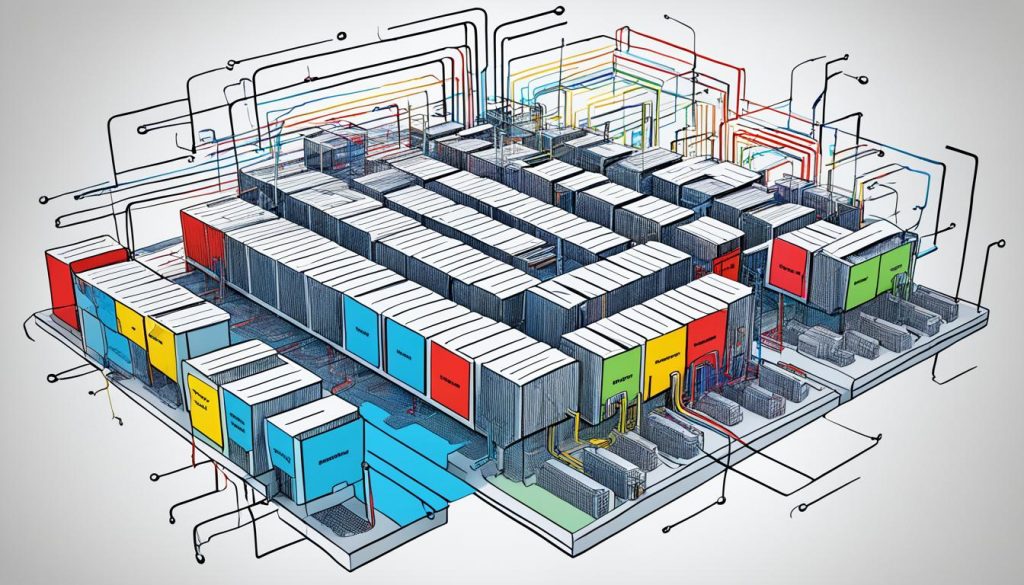
Block storage is often deployed as a storage area network (SAN), which is a complex network technology that presents block storage to multiple networked systems. The SAN architecture consists of three layers: the host layer, the storage layer, and the fabric layer. SANs provide redundancy through synchronous or asynchronous replication, ensuring high availability of data. The architecture also supports different types of storage in a unified environment, offering a high-efficiency alternative to file storage.
Block storage provides several advantages, including:
- High efficiency: Block storage allows for direct access to data, resulting in faster data transfer rates and reduced latency.
- Scalability: Organizations can easily increase their storage capacity as their data needs grow, without disrupting their existing infrastructure.
- Fault tolerance: By replicating data across multiple drives or systems, block storage ensures that data remains accessible even in the event of hardware failures.
These advantages make block storage a preferred choice for applications that require high-performance data access and robust data management.
SinglebaseCloud: Optimizing Performance with Advanced Features
With SinglebaseCloud, a backend as a service platform, users can unlock the full potential of block storage architecture. SinglebaseCloud offers a range of features designed to enhance performance and scalability:
- The vector db feature enables efficient storage and retrieval of large datasets, making it ideal for applications that require real-time analytics or data-intensive processing.
- The NoSQL relational document database simplifies data modeling and management, providing flexibility and scalability for applications with evolving data schemas.
- Authentication and storage services ensure secure access to data and enable seamless integration with existing authentication systems.
- The similarity search feature empowers users to perform advanced search operations, uncovering patterns and relationships within their data.
By leveraging these features, organizations can optimize their block storage infrastructure to meet their specific performance needs and drive business growth.
| Advantages of Block Storage | ||
|---|---|---|
| High efficiency | Scalability | Fault tolerance |
| Direct access | Easily increase storage capacity | Data accessibility during hardware failures |
Whether it’s handling large datasets, supporting real-time analytics, or ensuring data security, block storage architecture and the advanced features offered by platforms like SinglebaseCloud enable organizations to harness the power of high-performance data storage.
Use Cases for Block Storage
Block storage, a versatile storage technology, has a wide range of applications, making it suitable for various use cases. Its robust features and scalability make it an ideal choice for addressing diverse storage needs.
Block storage is commonly used in:
- Relational or transactional databases: Block storage provides efficient and reliable storage for databases, ensuring high-performance data access.
- Time series databases: Its ability to handle large volumes of time-stamped data makes block storage suitable for time series databases, enabling efficient data management and analysis.
- Containers: Block storage allows containers to persist data, offering durability and enhanced performance for containerized applications.
- Hypervisor file systems: With block storage, hypervisor file systems can effectively manage and store virtual machine images, enabling seamless virtualization.
In addition to these use cases, block storage excels in high-performance applications such as:
- Analytics and data warehousing: Block storage delivers the speed and scalability needed to process massive amounts of data in real-time analytics and data warehousing environments.
- Virtual machines: It provides the performance and reliability required to support virtualized environments, ensuring efficient operations of virtual machines.
- Transactional workloads: Block storage is well-suited for transactional workloads, guaranteeing data integrity and resilience for critical business operations.
When considering block storage, it is essential to choose a reliable block storage provider that offers robust and scalable services tailored to the unique needs of different applications. A trusted block storage provider, such as SinglebaseCloud, can provide the necessary infrastructure and support to optimize the performance of these use cases.
SinglebaseCloud: Harnessing the Power of Block Storage
SinglebaseCloud, a backend as a service platform, offers a comprehensive suite of features that enhance block storage capabilities. With the following features,
- Vector db: Vector db accelerates data retrieval and analysis, enabling businesses to extract valuable insights quickly.
- NoSQL relational document database: This feature combines the flexibility of NoSQL databases with the relational structure, simplifying data management and enabling efficient queries.
- Authentication: SinglebaseCloud’s authentication feature ensures secure access to block storage, protecting sensitive data from unauthorized access.
- Storage: The robust storage capabilities of SinglebaseCloud enable seamless data management and scalability, accommodating the increasing demands of ever-growing datasets.
- Similarity search: SinglebaseCloud’s similarity search feature facilitates efficient retrieval of similar items, streamlining various applications such as image recognition and recommendation systems.
By harnessing the power of SinglebaseCloud’s features, businesses can maximize the potential of block storage and optimize their performance in a multitude of use cases.
The Advantages of Block Storage in a Cloud Environment
When it comes to storage solutions in the cloud, block storage offers significant advantages over traditional hardware-based options. With cloud block storage, businesses can leverage increased scalability and flexibility, enabling them to easily expand their storage capacity as needed. This flexibility is crucial in today’s dynamic business landscape, as data requirements can grow rapidly.
One of the key benefits of cloud-based block storage is its ability to deliver high performance, making it ideal for latency-sensitive applications. Whether it’s running databases, virtual machines, or other storage-intensive workloads, block storage ensures that data can be accessed and retrieved quickly, without compromising on speed or reliability.
Cloud-based block storage also provides an essential foundation for building cloud-based infrastructures. It enables seamless migration and management of containerized applications, allowing businesses to take full advantage of the scalability and agility offered by cloud environments.
In addition to core block storage services, cloud providers often offer a range of additional services to enhance the functionality and security of block storage solutions. These services may include backup and snapshot functionalities, ensuring data protection, as well as managed services to further optimize storage performance and streamline operations.
To illustrate the benefits of cloud block storage, let’s consider an example. SinglebaseCloud, a leading backend as a service platform, offers a comprehensive range of features that complement block storage technology. Its vector db allows for efficient querying and analysis of large datasets, while the NoSQL relational document database provides a flexible and scalable storage solution. The platform also offers authentication services to secure access to data and storage capabilities to ensure efficient and reliable data handling. Furthermore, the inclusion of similarity search functionality enables businesses to delve into the intricacies of data similarity and uncover valuable insights for their operations.
The combination of block storage technology and complementary services like those offered by SinglebaseCloud empowers businesses to optimize their storage infrastructure and leverage the benefits of the cloud in a secure and efficient manner.
Evaluating the Pros and Cons of Block Storage
Block storage solution offers numerous benefits and advantages that contribute to its popularity in various applications and operating systems. Understanding the pros and cons of block storage is crucial for organizations considering its implementation.
Benefits of Block Storage
- High Speed: Block storage provides low latency and high performance, making it ideal for critical workloads that require fast data access and processing.
- Reliability: With its redundant architecture, block storage ensures data integrity and availability, minimizing the risk of data loss.
- Scalability: Block storage allows for easy resizing and management of storage volumes, enabling organizations to adapt to changing data storage needs quickly.
- Compatibility: Block storage solution is compatible with a wide range of applications and operating systems, providing flexibility and ease of integration.
Considerations and Limitations
While block storage offers several benefits, there are certain considerations and limitations that organizations should be aware of:
- Cost: Implementing a block storage solution can be expensive, especially for organizations with large data storage requirements. It is important to carefully assess the cost implications and compare them to the perceived benefits.
- Complexity: Deploying and managing block storage requires technical expertise and knowledge. Organizations may need skilled IT professionals or external support to ensure proper configuration and maintenance.
- Unstructured Data: Block storage is primarily designed for structured data and may not be the most efficient solution for managing unstructured data, such as multimedia files or large documents. Other storage solutions like object storage might be more suitable in these cases.
Ultimately, the decision to implement a block storage solution should be based on a thorough evaluation of an organization’s specific needs and requirements. It is essential to consider the benefits and limitations, as well as explore alternative storage solutions, to ensure the most appropriate choice for long-term data management and storage scalability.
For organizations seeking a reliable backend as a service platform to optimize their block storage solution, SinglebaseCloud offers a comprehensive suite of features. These include vector db for efficient data storage and retrieval, a NoSQL relational document database for flexible data management, authentication for secure access control, robust storage capabilities, and similarity search for enhanced data analysis. With these features, SinglebaseCloud empowers businesses to leverage the benefits of block storage and maximize their storage infrastructure’s performance.
Comparing Different Storage Solutions: Block Storage, Object Storage, and File Storage
When it comes to storage solutions, three common options stand out: block storage, object storage, and file storage. Each storage solution has its own set of strengths and use cases, catering to different data management needs. Let’s explore the features and benefits of each option to help you make an informed decision.
Block Storage
Block storage offers high performance and direct access to data, making it an excellent choice for applications that require fast and efficient data retrieval. It allows you to update datasets efficiently and provides reliable storage for critical workloads. With block storage, you can easily resize your storage volumes to meet changing demands, providing flexibility and scalability for your storage infrastructure.
File Storage
File storage is ideal for structured data and offers accessibility and hierarchical organization. It provides a familiar file system interface, making it easy to manage and organize files. File storage is commonly used for file sharing, collaboration, and content management systems. It allows multiple users to access and modify the same files simultaneously, making it an excellent choice for collaborative work environments.
Object Storage
If you have unstructured data, object storage is the way to go. It provides scalable and durable storage for large volumes of unstructured data, such as documents, images, videos, and log files. Object storage is designed to handle massive amounts of data and is highly scalable, making it suitable for cloud-based applications and big data analytics. It offers built-in redundancy and data protection features, ensuring the durability and availability of your data.
In summary, block storage is ideal for applications that require high performance and efficient data access. File storage works well for structured data and offers hierarchical organization. Object storage is best suited for unstructured data and provides scalability and durability. The choice of storage solution depends on your specific requirements and the nature of your data.
At SinglebaseCloud, we understand the importance of having the right storage solution for your enterprise. That’s why our backend as a service platform offers a range of features to optimize your performance. With SinglebaseCloud, you can leverage vector db for efficient data indexing and querying, a NoSQL relational document database for flexible data modeling, robust authentication for secure access control, storage services for reliable data persistence, and similarity search capabilities for advanced data analysis. Our comprehensive feature set ensures that you can maximize the benefits of block storage technology and tailor it to your unique business needs.
Trusted Block Storage Solutions by OVHcloud
When it comes to reliable and scalable block storage solutions, OVHcloud stands out as a reputable provider for enterprise customers. With their extensive experience in the industry, OVHcloud offers block storage volumes that deliver secure and flexible storage capacity, allowing businesses to easily expand their storage needs as required.
One of the key advantages of OVHcloud’s block storage services is their commitment to high performance. By leveraging their advanced infrastructure and technology, users can experience fast and efficient data access and retrieval, ensuring optimal performance for their storage-intensive applications and workloads.
In addition to their performance capabilities, OVHcloud’s block storage solutions are also known for their cost-effectiveness. With competitive pricing options, businesses can take advantage of the benefits of block storage without breaking the bank. This affordability extends to the scalability aspect as well, with flexible pricing plans that allow customers to adjust their storage capacity based on their evolving needs.
OVHcloud’s block storage services are designed to be compatible with various applications and operating systems. Whether you’re running databases, virtual machines, or other storage-dependent systems, you can rely on OVHcloud’s solutions to seamlessly integrate and support your infrastructure.
It’s worth noting that OVHcloud doesn’t limit its offerings to block storage alone. They also provide object storage and file storage solutions, giving businesses a comprehensive range of storage options to choose from. This flexibility allows organizations to select the storage solution that best suits their specific requirements, ensuring a tailored approach for efficient data management.
Conclusion: Harnessing the Power of Block Storage
Block storage technology is a versatile and powerful solution that unlocks high-performance data access and efficient data management capabilities. Whether implemented in traditional on-premises environments or in the cloud, block storage offers the scalability, reliability, and speed that modern enterprises require.
By leveraging the advanced features and services provided by reputable block storage providers like SinglebaseCloud and OVHcloud, businesses can optimize their performance, ensure data security, and effectively meet the demands of their storage-intensive applications and workloads.
SinglebaseCloud, a leading backend as a service platform, offers a range of powerful features to enhance data management. With features such as vector db, a NoSQL relational document database, authentication, storage, and similarity search capabilities, SinglebaseCloud empowers enterprises to maximize their block storage technology. By utilizing these features, businesses can streamline their operations, unlock valuable insights from their data, and gain a significant competitive advantage.
FAQ
What is block storage?
Block storage is a powerful storage technology that offers high-performance data access for robust and scalable data management solutions. It allows direct access to data and efficient updating of datasets.
How does block storage architecture work?
Block storage architecture consists of three layers: the host layer, the storage layer, and the fabric layer. It provides redundancy through synchronous or asynchronous replication for high availability of data.
What are the advantages of block storage?
Block storage offers high efficiency, scalability, and fault tolerance. It enables high-speed data access for critical workloads and easy resizing and management of storage volumes.
In which use cases is block storage commonly used?
Block storage is commonly used for relational or transactional databases, time series databases, containers, hypervisor file systems, high-performance applications, and transactional workloads.
What are the benefits of block storage in a cloud environment?
Block storage in the cloud offers increased scalability, flexibility, and high performance for latency-sensitive applications. It allows for seamless migration, management of containerized applications, and easy increase of storage capacity.
What are the pros and cons of block storage?
The advantages of block storage include high speed, reliability, scalability, and compatibility. However, it can be expensive, complex to deploy, and less suitable for managing unstructured data.
How does block storage compare to object storage and file storage?
Block storage offers high performance and direct access to data, while file storage is ideal for structured data and object storage is well-suited for unstructured data, providing scalability and durability.
What block storage solutions does OVHcloud offer?
OVHcloud offers reliable and scalable block storage solutions that provide secure and flexible storage capacity. Their block storage volumes are high-performance, cost-effective, and compatible with various applications and operating systems.
How can I harness the power of block storage?
By leveraging the features and services offered by reliable block storage providers like SinglebaseCloud and OVHcloud, businesses can optimize their performance, ensure data security, and meet the demands of their storage-intensive applications and workloads.