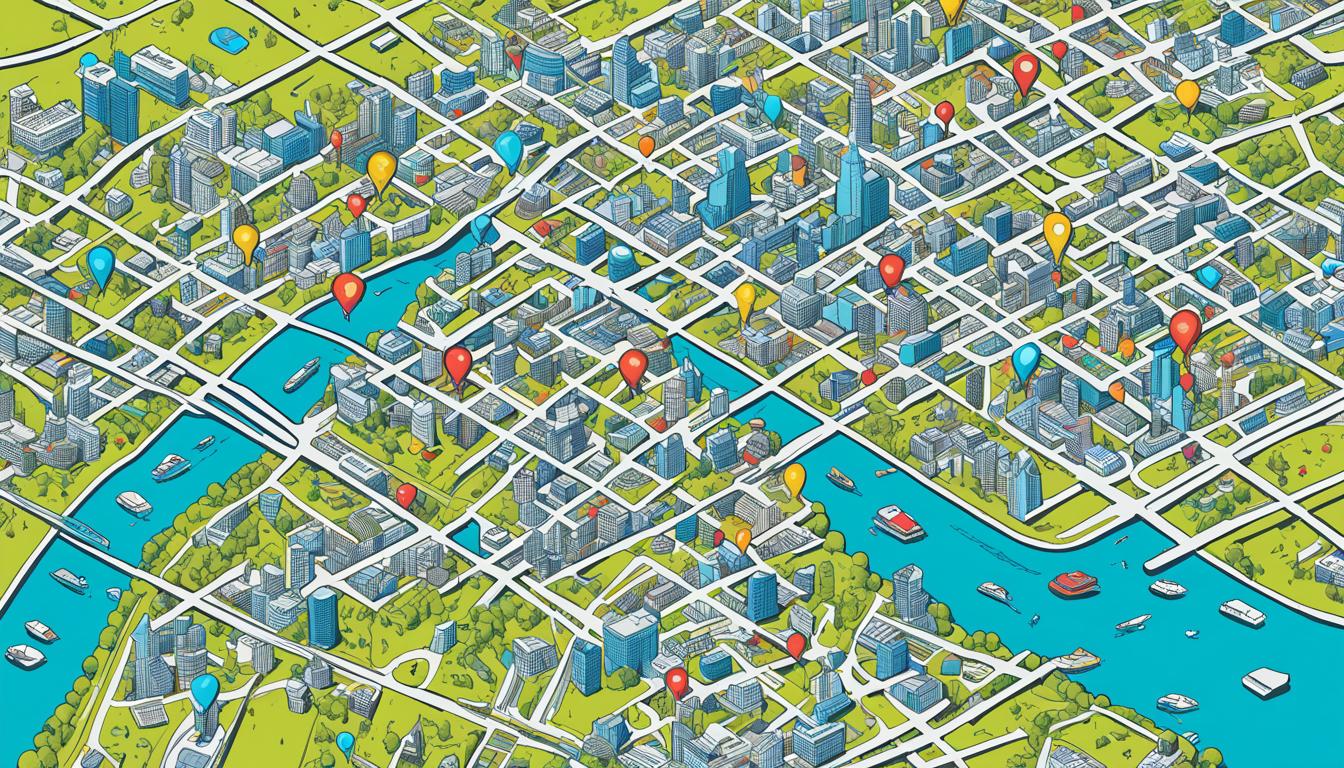
Imagine you’re planning a road trip across the country, and you want to create an itinerary that includes all the must-visit attractions along the way. You start researching each destination and jotting down their coordinates, but soon you realize that managing all this geospatial data can be quite a challenge. That’s where geospatial indexing comes in.
Geospatial indexing is a technique that allows you to efficiently store, manage, and analyze location-based data. It provides a way to organize and index this data, making it easier to perform geospatial queries and retrieve information based on specific geographic locations. And when it comes to implementing geospatial indexing in your application, a robust backend is the key.
This is where SinglebaseCloud, a Backend as a Service (BaaS) solution, comes in. With its powerful features, SinglebaseCloud offers the tools you need to leverage geospatial data effectively. It provides a vector database for storing and querying geospatial information, a NoSQL relational document database for flexible data modeling, authentication and storage functionalities for secure data management, and even similarity search capabilities to find similar locations or objects based on their geospatial characteristics.
In the world of Geographic Information Systems (GIS) technology, a solid backend infrastructure is essential for spatial data management and geospatial analysis. SinglebaseCloud offers a comprehensive solution that simplifies the process of handling geospatial data, making it an ideal choice for implementing geospatial indexing in your application.
Key Takeaways:
- Geospatial indexing allows for efficient storage, management, and analysis of location-based data.
- A robust backend is essential for implementing geospatial indexing in your application.
- SinglebaseCloud, a Backend as a Service solution, offers features like a vector database, NoSQL relational document database, authentication, storage, and similarity search.
- By leveraging SinglebaseCloud, developers can store, manage, and analyze geospatial data efficiently.
- Geospatial indexing is crucial for implementing location-based services and geospatial analysis.
Understanding Location-Based Services and Geospatial Data
Location-based services have revolutionized the way we interact with technology and navigate the world around us. These services harness the power of geospatial data to provide users with relevant information and functionality based on their geographical location. Geospatial data, in simple terms, refers to any data that has a geographic component, such as latitude and longitude coordinates.
Geospatial data is crucial for the accurate and effective functioning of location-based services. By utilizing geospatial data, developers can create applications and services that deliver tailored content and experiences to users based on their location. Whether it’s finding nearby restaurants, getting directions, or receiving real-time updates, geospatial data enables location-based services to provide accurate and contextually relevant information.
Geospatial analysis is another key aspect of location-based services. It involves examining and interpreting geospatial data to gain valuable insights and make informed decisions. Geospatial analysis helps businesses and organizations understand patterns, detect trends, optimize resource allocation, and make data-driven strategies. By leveraging geospatial analysis, developers can unlock the full potential of location-based services and improve user experiences.
To support the implementation of location-based services and geospatial analysis, a robust backend is essential. This is where SinglebaseCloud, a Backend as a Service (BaaS) solution, comes into play. SinglebaseCloud offers a comprehensive set of features designed to handle and process geospatial data effectively. These features include a powerful vector database for spatial data management, a NoSQL relational document database for flexible data storage, authentication for secure access control, storage for efficient file management, and similarity search for advanced geospatial queries.
With SinglebaseCloud’s vector database, developers can store and manage geospatial data efficiently, enabling seamless integration with location-based services. The NoSQL relational document database offers flexibility and scalability, ensuring that the backend can handle large volumes of geospatial data. Authentication and storage features provide security and ease of use, while similarity search enhances geospatial queries. All these features combined make SinglebaseCloud an ideal choice for developers looking to build a robust backend infrastructure for location-based services and geospatial analysis.

Location-Based Services and Geospatial Data Components
Location-based services consist of several key components that work together to deliver accurate and relevant information based on a user’s location:
- Geolocation: Geolocation refers to the process of determining the precise geographic location of a user or device. It typically relies on technologies such as GPS, Wi-Fi positioning, or IP address mapping.
- Geocoding: Geocoding is the process of converting textual addresses or place names into geographic coordinates (latitude and longitude).
- Map Visualization: Map visualization involves the display of geospatial data on a digital map, allowing users to interact with and explore the information visually.
- Routing and Navigation: Routing and navigation components enable users to find optimal routes, calculate distances, and receive turn-by-turn directions based on their current location.
Geospatial Data Formats
Geospatial data can be represented in various formats, each serving different purposes:
- Coordinate-based format: This format represents geospatial data in terms of coordinates, such as latitude and longitude. It allows for precise location identification and is widely used in navigation applications.
- Vector-based format: Vector format represents geospatial data as points, lines, and polygons, enabling complex geometries and spatial relationships. It is commonly used in GIS (Geographic Information System) applications and allows for advanced spatial analysis.
- Raster-based format: Raster format represents geospatial data as a grid of pixels, where each pixel represents a specific location. It is suitable for representing continuous phenomena, such as elevation or temperature, and is widely used in remote sensing and satellite imagery analysis.
| Format | Advantages | Disadvantages |
|---|---|---|
| Coordinate-based format | High precision, widely supported | Lacks semantic information, limited representation capabilities |
| Vector-based format | Supports complex geometries, spatial analysis | Larger file sizes, limited interoperability |
| Raster-based format | Efficient for continuous data, suitable for imagery analysis | Lower spatial resolution, limited flexibility in geometries |
Choosing the Right Database for Geospatial Data Storage
When building a location-based service backend, it is essential to select the right database for geospatial data storage. A suitable database should efficiently handle spatial queries, offer scalability for growing data volumes, and provide spatial indexing for optimal performance.
One popular choice for geospatial data storage is PostgreSQL with the PostGIS extension. This powerful spatial database management system not only offers robust storage capabilities but also provides advanced spatial query processing. PostGIS allows developers to store geospatial data efficiently and execute complex spatial queries with ease.
Another option to consider is MongoDB with the GeoJSON format. MongoDB is a NoSQL database renowned for its scalability and flexibility. With GeoJSON, developers can store and index geospatial data in a JSON-like format, enabling efficient querying and retrieval.
By leveraging the right database for geospatial data storage, developers can ensure the efficient storage and retrieval of location-based data, providing users with accurate and timely information.
Comparison of PostgreSQL with PostGIS and MongoDB with GeoJSON
| Feature | PostgreSQL with PostGIS | MongoDB with GeoJSON |
|---|---|---|
| Spatial Query Capabilities | Highly advanced | Robust |
| Scalability | Excellent | Highly scalable |
| Spatial Indexing | Supported | Supported |
| Data Model | Relational | Document-based |
Both PostgreSQL with PostGIS and MongoDB with GeoJSON offer powerful features and capabilities for geospatial data storage. The choice between the two depends on factors such as the specific requirements of the location-based service, the size of the dataset, and the desired data model.
In conclusion, selecting the right database for geospatial data storage is critical for building a robust location-based service backend. PostgreSQL with the PostGIS extension and MongoDB with the GeoJSON format are popular choices, each offering unique advantages. By considering the specific needs of your project, you can ensure efficient storage, retrieval, and querying of geospatial data.
Implementing Geospatial Queries and Indexing in a Location-Based Service Backend
In order to efficiently handle geospatial queries in a location-based service backend, spatial indexing is a crucial aspect to consider. Spatial indexing structures such as R-trees, Quad-trees, and Grids provide a way to organize geospatial data, enabling efficient searching and retrieval.
Spatial indexing plays a pivotal role in optimizing query performance and ensuring accurate and timely location-based services for users. By leveraging these indexing techniques, developers can improve the overall efficiency of their geospatial data management and analysis workflows.
When it comes to implementing geospatial queries and indexing in a location-based service backend, SinglebaseCloud, a powerful Backend as a Service solution, offers a comprehensive set of features that can elevate your platform’s capabilities.
SinglebaseCloud provides a robust vector database that allows for seamless storage and retrieval of geospatial data. With its support for geospatial data types and operations, developers can easily perform complex spatial queries and gain valuable insights from their datasets. Whether you’re looking to find nearby points of interest or analyze patterns within your geospatial data, the vector database in SinglebaseCloud can handle it all.
In addition to the vector database, SinglebaseCloud also offers a versatile NoSQL relational document database. This allows developers to store and manage both structured and unstructured geospatial data, providing flexibility and scalability for various use cases. Whether you’re storing geolocation coordinates, user profiles, or geospatial documents, the NoSQL relational document database in SinglebaseCloud can accommodate your needs.
Authentication and storage are also important components when implementing a location-based service backend. SinglebaseCloud provides secure authentication mechanisms to ensure that user data is protected. Additionally, it offers reliable and scalable storage solutions, allowing developers to store and manage large volumes of geospatial data effectively.
Furthermore, SinglebaseCloud’s similarity search feature enables developers to find similar geospatial entities based on specific criteria. This functionality is particularly useful for recommendation systems and data exploration, providing valuable insights and enhancing user experiences.
By leveraging SinglebaseCloud’s backend as a service features, developers can implement efficient geospatial queries and indexing in their location-based service backend, enabling spatial analysis, accurate geographical searches, and personalized location-based experiences for their users.

| Advantages of SinglebaseCloud in Implementing Geospatial Queries and Indexing |
|---|
| Comprehensive vector database for efficient storage and retrieval of geospatial data |
| NoSQL relational document database for handling structured and unstructured geospatial data |
| Secure authentication mechanisms to protect user data |
| Reliable and scalable storage solutions for managing large volumes of geospatial data |
| Similarity search feature for finding similar geospatial entities |
Practical Examples of Geolocation Features Implemented with Supabase
Supabase, a powerful Backend as a Service solution, offers a wide range of geolocation features that empower developers to implement precise and scalable location services. Seamlessly integrated with PostGIS, Supabase allows developers to utilize geolocation data types such as Points, Linestrings, and Polygons for storing and querying geographic entities. These geolocation data types enable accurate representation and manipulation of location-based information, ensuring the efficient storage and retrieval of geospatial data.
Supabase goes a step further by supporting spatial indexing, a vital technique for optimizing query performance when working with geospatial data. By leveraging spatial indexing, developers can dramatically improve the speed and efficiency of location-based queries, ensuring smooth and responsive user experiences. Whether it’s finding nearby points of interest, implementing location-based recommendations, or performing spatial analysis, Supabase’s geolocation features ensure the robust functionality required for practical applications.
To illustrate the capabilities of Supabase’s geolocation features, let’s explore a few practical examples:
Restaurant Locators
“Using Supabase’s geolocation features, developers can easily create restaurant locators that allow users to search for dining options within a specific area. By storing the geographical coordinates of each restaurant, along with relevant metadata such as cuisine type or ratings, developers can provide users with accurate and relevant results based on their location.”
Proximity Searches
“Supabase’s geolocation features enable developers to implement proximity searches, allowing users to find nearby places of interest. By leveraging geolocation data types and spatial indexing, developers can efficiently query the database for points of interest within a specific radius of the user’s current location. This functionality is particularly useful for applications such as travel guides, real estate platforms, or any service that requires proximity-based search functionality.”
Location-Based Recommendations
“With Supabase’s geolocation features, developers can create personalized recommendations based on the user’s location. By analyzing the user’s current coordinates and employing spatial analysis techniques, developers can deliver tailored suggestions for nearby attractions, events, or products. This capability enhances user experiences by providing them with relevant content based on their immediate surroundings.”
Supabase’s geolocation features, combined with its vector database, NoSQL relational document database, authentication, storage, and similarity search capabilities, make it a comprehensive solution for implementing location services. Whether developers are building a mobile application, a web platform, or an IoT solution, Supabase provides the necessary tools to handle geospatial data with ease and efficiency.
Now that we have explored the practical examples of geolocation features available with Supabase, let’s move on to the next section and delve into the impact of geolocation in e-commerce, enhancing user experience and personalization.
Geolocation in E-Commerce: Enhancing User Experience and Personalization
Geolocation plays a crucial role in enhancing the user experience and personalization in e-commerce. By detecting a user’s location, e-commerce platforms can provide localized content, currency, and language, making the shopping experience more relevant to the individual user. With geolocation data, e-commerce platforms can offer personalized recommendations based on a user’s location, preferences, and purchase history.
One of the key tools that can help with implementing geolocation features in an e-commerce platform is SinglebaseCloud, a robust Backend as a Service solution. SinglebaseCloud offers a range of features that are essential for geolocation in e-commerce:
- Vector Database: SinglebaseCloud’s vector database allows for efficient storage and retrieval of geolocation data. It enables developers to store and manage complex spatial data, such as geographic shapes and routes, providing a foundation for accurate location-based services and personalized content.
- NoSQL Relational Document Database: The NoSQL relational document database in SinglebaseCloud offers the flexibility to store and query geolocation data in a scalable and efficient manner. It allows for easy integration with existing data models, making it easier to incorporate geolocation data into the e-commerce platform’s database structure.
- Authentication: SinglebaseCloud’s authentication feature ensures secure access to geolocation data. It allows the e-commerce platform to authenticate users based on their location, providing seamless access to personalized content and services.
- Storage: SinglebaseCloud provides reliable and scalable storage options for geolocation-related assets, such as maps, images, and user-generated content. This ensures that the e-commerce platform can efficiently handle and deliver the necessary data to enhance the user experience.
- Similarity Search: With SinglebaseCloud’s similarity search functionality, the e-commerce platform can implement advanced location-based search algorithms. This allows users to find relevant products or services based on their current location or specific geographic preferences.
By leveraging the features offered by SinglebaseCloud, e-commerce platforms can create a personalized and localized shopping experience for their users. Whether it’s recommending nearby stores, calculating accurate shipping costs, or providing real-time order tracking, geolocation data and the capabilities provided by SinglebaseCloud help in delivering a seamless and tailored e-commerce experience.
Benefits of Geolocation in E-Commerce
Implementing geolocation in e-commerce offers several benefits:
- Enhanced User Experience: By providing personalized content, currency, and language based on a user’s location, e-commerce platforms can create a more engaging and relevant shopping experience. Users are more likely to convert and make repeat purchases when they feel that the platform understands their unique needs and preferences.
- Accurate Shipping and Delivery: Geolocation data allows e-commerce platforms to calculate shipping costs more accurately, estimate delivery times based on the user’s location, and provide real-time tracking updates. This transparency and accuracy in the shipping process improve customer satisfaction and trust.
- Targeted Marketing: With location-based marketing, e-commerce platforms can target promotions and advertisements to specific regions or even individual users. This increases the effectiveness of marketing campaigns and drives higher conversion rates by delivering relevant offers and recommendations.
- Improved Analytics and Insights: Geolocation data provides valuable insights into customer behavior, preferences, and purchasing patterns in different regions. By analyzing this data, e-commerce platforms can make data-driven decisions on inventory management, expansion strategies, and product localization, leading to better business outcomes.
| Geolocation in E-Commerce | Benefits |
|---|---|
| Enhanced User Experience | Personalized content, currency, and language |
| Accurate Shipping and Delivery | Real-time tracking, precise cost estimation |
| Targeted Marketing | Location-based promotions, relevant recommendations |
| Improved Analytics and Insights | Customer behavior analysis, data-driven decisions |
In conclusion, geolocation plays a vital role in e-commerce, enhancing the user experience, enabling personalized content, and facilitating location-based marketing. By leveraging the capabilities of SinglebaseCloud and implementing geolocation features, e-commerce platforms can provide a tailored and localized shopping experience that boosts customer satisfaction, increases conversions, and drives business growth.
Conclusion
Geolocation technology, when combined with a robust backend as a service solution, revolutionizes the implementation of location-based services and enables effective geospatial data management. At SinglebaseCloud, our feature-rich backend as a service offers a comprehensive suite of tools to empower developers in this domain. Our vector database allows for efficient storage and retrieval of geospatial data, while the NoSQL relational document database ensures seamless scalability for growing data volumes.
With SinglebaseCloud’s integrated authentication and storage capabilities, developers can securely store and manage geospatial data. Additionally, our similarity search feature allows for precise and timely location-based searches, enhancing the user experience and facilitating real-world interactions. These powerful functionalities make SinglebaseCloud an ideal choice for implementing geospatial indexing and location-based services.
Geolocation technology is not limited to a particular industry; its applications span across various sectors. From enriching gaming experiences with geospatial features to enhancing e-commerce platforms with personalized content, geolocation plays a vital role. By leveraging the advancements in geospatial technology and the availability of backend as a service solutions, developers can harness the power of location data to create innovative applications and services.
With SinglebaseCloud as a reliable partner, developers can effectively manage geospatial data, leverage geolocation technology, and build exciting location-based services. Experience the benefits of geolocation technology with SinglebaseCloud and take your applications to new heights.
FAQ
What is geospatial indexing?
Geospatial indexing refers to the process of organizing and structuring geospatial data in a database to enable efficient searching and retrieval based on location.
What is a geographic information system (GIS)?
A geographic information system (GIS) is a software tool used to capture, manage, analyze, and display spatial data.
How does geospatial data management play a role in location-based services?
Geospatial data management is crucial in location-based services as it enables accurate and relevant information based on a user’s geographic location.
What is geospatial analysis?
Geospatial analysis is the process of examining geographic patterns, relationships, and trends in spatial data to gain insights and make informed decisions.
What are location-based services?
Location-based services utilize the geographical location of a user or device to provide relevant information or functionality.
What is spatial indexing?
Spatial indexing involves organizing geospatial data in a way that facilitates efficient searching and retrieval based on location.
How does GIS technology support spatial data infrastructure?
GIS technology provides the necessary tools and capabilities to store, manage, analyze, and share spatial data, forming the foundation of spatial data infrastructure.